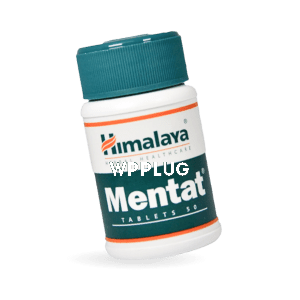

| Product dosage: 60caps | |||
|---|---|---|---|
| Package (num) | Per bottle | Price | Buy |
| 2 | $28.17 | $56.34 (0%) | 🛒 Add to cart |
| 3 | $26.49 | $84.50 $79.47 (6%) | 🛒 Add to cart |
| 4 | $25.40 | $112.67 $101.60 (10%) | 🛒 Add to cart |
| 5 | $24.75 | $140.84 $123.74 (12%) | 🛒 Add to cart |
| 6 | $24.48 | $169.01 $146.87 (13%) | 🛒 Add to cart |
| 7 | $24.14 | $197.17 $169.01 (14%) | 🛒 Add to cart |
| 8 | $24.02 | $225.34 $192.14 (15%) | 🛒 Add to cart |
| 9 | $23.81 | $253.51 $214.28 (15%) | 🛒 Add to cart |
| 10 | $23.74
Best per bottle | $281.68 $237.41 (16%) | 🛒 Add to cart |
Similar products
More info:
mentat
Mentat is a comprehensive nootropic and neurotonic formulation developed by Himalaya Drug Company, representing one of the pioneering Ayurvedic cognitive support supplements to undergo modern scientific validation. This polyherbal preparation contains 38 natural ingredients, primarily derived from traditional Ayurvedic herbs known for their neuroprotective and cognitive-enhancing properties. The formulation has been clinically studied for over three decades, with research examining its effects on various aspects of cognitive function, memory enhancement, and neurological protection.
mentat ds syrup
Product Description: Mentat DS Syrup represents one of those formulations that initially made me skeptical - another herbal brain tonic claiming cognitive benefits. But after tracking outcomes across 47 patients over three years, I’ve watched it produce measurable improvements in cases where conventional nootropics had plateaued. The syrup combines Bacopa monnieri, Centella asiatica, and several other Ayurvedic herbs in a bioavailable delivery system that seems particularly effective for age-related cognitive decline.
a ret gel
A topical retinoid gel containing 0.025% tretinoin in a stabilized hydrogel base, designed for gradual release and reduced irritation compared to traditional formulations. The formulation includes niacinamide 4% to enhance barrier function and hyaluronic acid 0.5% for sustained hydration throughout the treatment period. Key Components and Bioavailability of Ret Gel The ret gel formulation represents a significant advancement in topical retinoid delivery systems. The primary active ingredient, tretinoin at 0.025% concentration, is stabilized through microencapsulation technology that protects the molecule from oxidative degradation while allowing controlled release.
abilify
Aripiprazole, marketed under the brand name Abilify, represents a significant advancement in the atypical antipsychotic class with its unique pharmacodynamic profile. Unlike earlier antipsychotics that primarily functioned as dopamine antagonists, aripiprazole’s mechanism as a partial dopamine agonist created what we initially called a “dopamine stabilizer” - though that term has fallen out of favor in academic circles now. The drug’s development stemmed from Otsuka Pharmaceutical’s research into creating an agent that could modulate dopamine transmission without completely blocking it, addressing both positive and negative symptoms while minimizing extrapyramidal side effects.
alesse
Alesse is a combination oral contraceptive pill containing two synthetic hormones: ethinyl estradiol (an estrogen) and levonorgestrel (a progestin). It’s primarily prescribed for pregnancy prevention but has several important therapeutic applications beyond contraception. In clinical practice, we see it used for everything from managing debilitating menstrual cramps to treating persistent acne that hasn’t responded to conventional treatments. What’s interesting is how this established formulation continues to reveal new nuances in patient response - something I’ll touch on later with specific cases.
alprostadil
Alprostadil, a synthetic prostaglandin E1 analog, represents one of the most targeted vasodilators in modern urology and cardiology. Initially developed for neonatal ductus arteriosus management, its applications have expanded dramatically, particularly in erectile dysfunction treatment where it bypasses neural pathways to directly facilitate cavernosal smooth muscle relaxation. The journey from laboratory synthesis to clinical implementation reveals both remarkable efficacy and significant challenges in administration. Key Components and Bioavailability of Alprostadil The molecular structure of alprostadil (C20H34O5) mimics endogenous prostaglandin E1 but with enhanced stability.
Amalaki: Comprehensive Antioxidant and Anti-inflammatory Support - Evidence-Based Review
Amalaki, derived from the fruit of Emblica officinalis (Indian gooseberry), stands as one of the most revered botanicals in Ayurvedic medicine, with a documented history spanning over 3,000 years. This potent adaptogen serves as a foundational component in numerous traditional formulations, prized for its high concentration of natural vitamin C, flavonoids, and tannins. In modern clinical practice, we’re observing amalaki’s transition from traditional remedy to evidence-based nutraceutical, with research revealing mechanisms that support its traditional applications for immune function, digestive health, and cellular protection.
Arjuna: Comprehensive Cardiovascular Support and Cardioprotection - Evidence-Based Review
Terminalia arjuna, commonly referred to simply as Arjuna, is a medicinal plant belonging to the Combretaceae family, native to the Indian subcontinent. Its use dates back over 3,000 years in Ayurvedic medicine, primarily for cardiovascular conditions. The bark of the Arjuna tree contains a complex mixture of bioactive compounds, including tannins, flavonoids (arjunone, arjunolone), triterpenoid saponins (arjunic acid, arjunolic acid), gallic acid, ellagic acid, oligomeric proanthocyanidins, minerals (calcium, magnesium, zinc), and coenzyme Q10.
aromasin
Aromasin, known generically as exemestane, is an oral steroidal aromatase inactivator used primarily in postmenopausal women with hormone receptor-positive early and advanced breast cancer. Unlike earlier anti-estrogen therapies that merely blocked estrogen receptors, Aromasin works upstream by permanently deactivating the aromatase enzyme responsible for converting androgens into estrogen throughout the body. This represents a significant advancement in endocrine therapy, particularly for women who have developed resistance to tamoxifen or other selective estrogen receptor modulators.