| Product dosage: 250mg | |||
|---|---|---|---|
| Package (num) | Per pill | Price | Buy |
| 180 | $0.32 | $57.34 (0%) | 🛒 Add to cart |
| 360 | $0.29
Best per pill | $114.69 $104.63 (9%) | 🛒 Add to cart |
| Product dosage: 500mg | |||
|---|---|---|---|
| Package (num) | Per pill | Price | Buy |
| 60 | $0.72 | $43.26 (0%) | 🛒 Add to cart |
| 90 | $0.64 | $64.89 $57.34 (12%) | 🛒 Add to cart |
| 120 | $0.59 | $86.52 $70.42 (19%) | 🛒 Add to cart |
| 180 | $0.55 | $129.78 $98.59 (24%) | 🛒 Add to cart |
| 270 | $0.52 | $194.67 $139.84 (28%) | 🛒 Add to cart |
| 360 | $0.51
Best per pill | $259.55 $183.10 (29%) | 🛒 Add to cart |
Similar products
More info:
Tetracycline: Broad-Spectrum Antibacterial Therapy for Bacterial Infections - Evidence-Based Review
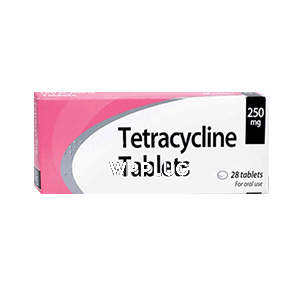
Tetracycline is a foundational broad-spectrum antibiotic in the tetracycline class, originally derived from Streptomyces bacteria but now largely produced synthetically. It’s been a workhorse in clinical practice for decades, primarily for its bacteriostatic action against a wide range of Gram-positive and Gram-negative bacteria, spirochetes, mycoplasmas, chlamydiae, and rickettsiae. Its role has evolved with the advent of resistance, but it remains a critical agent for specific indications where its pharmacokinetic profile and cost-effectiveness are advantageous.
Accutane: Transformative Severe Acne Treatment - Evidence-Based Review
Isotretinoin, commonly known by its original brand name Accutane, represents one of modern dermatology’s most potent tools and controversial medications. This oral retinoid derivative of vitamin A fundamentally alters severe acne treatment paradigms, but its significant teratogenic risks and side effect profile demand rigorous clinical management. What began as Hoffmann-La Roche’s breakthrough drug has become the definitive intervention for nodulocystic acne resistant to conventional therapies. 1. Introduction: What is Accutane? Its Role in Modern Medicine Accutane, the brand name for isotretinoin, belongs to the retinoid class of medications and functions as a synthetic vitamin A derivative.
ampicillin
Ampicillin is a broad-spectrum aminopenicillin antibiotic derived from the basic penicillin nucleus. It works by inhibiting bacterial cell wall synthesis, making it bactericidal against susceptible organisms. What’s fascinating about ampicillin is its unique ability to penetrate gram-negative bacteria better than earlier penicillins while maintaining activity against gram-positive organisms. We’ve been using this workhorse antibiotic since the 1960s, and despite newer agents emerging, it remains clinically relevant for specific infections where its spectrum aligns perfectly with common pathogens.
Calcium Carbonate: Comprehensive Bone and Systemic Health Support - Evidence-Based Review
Calcium carbonate represents one of the most fundamental yet frequently misunderstood compounds in clinical practice. When patients ask about calcium supplements, they’re often surprised to learn that the chalky white tablets they’ve been taking for years have a complex pharmacology that extends far beyond basic bone health. The reality is that calcium carbonate sits at the intersection of gastroenterology, nephrology, cardiology, and preventive medicine—a fact that becomes abundantly clear when you start tracking patient outcomes over time.
Ceftin: Effective Bacterial Infection Treatment - Evidence-Based Review
Cefuroxime axetil, marketed under the brand name Ceftin, represents a significant advancement in oral antibiotic therapy. As a second-generation cephalosporin, it bridges the gap between first-generation agents and more potent intravenous antibiotics, offering broad-spectrum coverage with the convenience of oral administration. Its development addressed the critical need for effective outpatient treatment of moderate to severe bacterial infections, particularly when first-line antibiotics fail or when dealing with resistant organisms. In clinical practice, we’ve found Ceftin particularly valuable for respiratory tract infections, skin and soft tissue infections, and certain genitourinary infections where its pharmacokinetic profile and spectrum of activity make it an optimal choice.
chloramphenicol
Let me walk you through our experience with chloramphenicol - honestly, this antibiotic has been both a lifesaver and a constant source of clinical headaches over my twenty-three years in infectious disease. I still remember my first encounter with it during residency, treating a teenage meningitis case where nothing else was working. The pharmacy had to specially compound it since commercial formulations were already becoming scarce. Chloramphenicol: Broad-Spectrum Antibiotic for Resistant Infections - Evidence-Based Review 1.
chloromycetin
Chloromycetin represents one of those fascinating cases where an older antimicrobial agent keeps finding relevance in modern therapeutic landscapes despite newer alternatives. Originally developed in the late 1940s, this broad-spectrum antibiotic—known generically as chloramphenicol—has maintained a specific, albeit narrow, role in treating serious infections where other antibiotics fail or aren’t suitable. What’s particularly interesting is how its risk-benefit profile has been refined over decades of clinical use, creating very specific indications where it remains the drug of choice.
differin
Adapalene, marketed under the brand name Differin, represents a significant advancement in topical retinoid therapy, specifically formulated as a 0.1% gel, cream, or lotion for the treatment of acne vulgaris. Originally available only by prescription, its FDA approval for over-the-counter use in 2016 democratized access to a potent acne treatment that modulates skin cell turnover and reduces inflammation. Unlike many cosmetic acne products that merely address surface symptoms, Differin targets the fundamental pathological processes of acne through receptor-selective retinoid activity.
digoxin
Digoxin is one of those fascinating drugs that bridges traditional herbal medicine with modern cardiology - we’ve been using foxglove extracts for heart conditions since the 18th century, but it wasn’t until the 20th century that we isolated the pure cardiac glycoside. This medication occupies a unique space in our therapeutic arsenal, being both incredibly effective and notoriously difficult to manage properly. I’ve seen countless patients where digoxin made the difference between decompensated heart failure and stable functional status, but I’ve also managed my share of toxicity cases that landed people in the ICU.